
Launching a Live Chat service for vulnerable families when children's centres closed
Action for Children runs Children's Centres across the UK, providing early support to families who need it. Budget cuts meant physical centres were closing. The families who relied on them still needed help, but the old model was no longer viable. The challenge wasn't just building a chat interface. It was rethinking how practitioners communicate with vulnerable families, what a "session" looks like in a digital context, and how to preserve the warmth and trust of face-to-face support through a screen.
This project covered service design research, product design and build, and coaching the internal team to maintain the quality of family support services during the transition. Close collaboration with practitioners and service staff ran throughout.
From physical centres to digital-first support
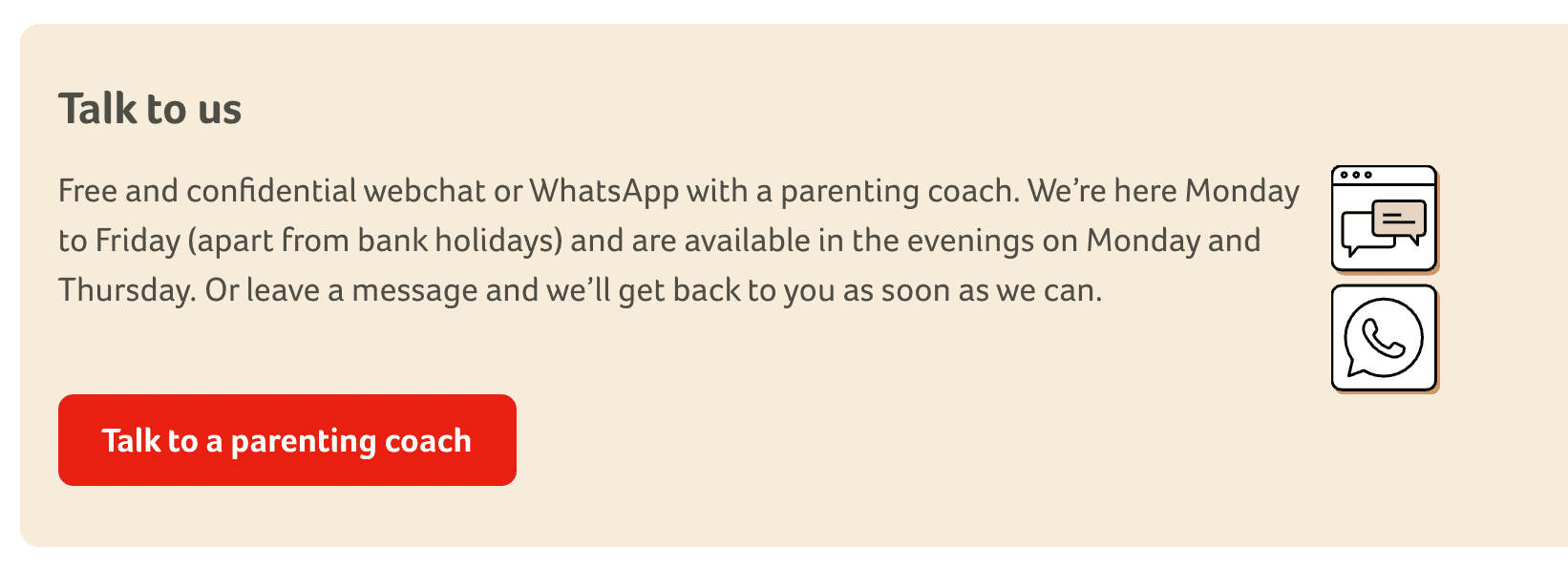
The digital service gave families a direct line to a parenting coach via webchat or WhatsApp — no appointment needed, no centre to travel to. For families in areas where physical provision had disappeared entirely, this was the difference between having support and having none.
Coaching first, then building
The work started with coaching Action for Children's internal team, then moved into a service design research programme to understand what families actually needed and where the operational pain points were.
From there, a Live Chat service was prototyped and tested with practitioners. This wasn't about adding a chat widget. It meant rethinking how practitioners communicated, what a "session" looked like in a digital context, and how to maintain the warmth and trust of face-to-face support through a screen.
Close collaboration with service staff
who knew the families and the nuances of the work
Iterative prototyping
to test assumptions before committing to a solution
Practitioner retraining
to adapt communication styles and workflows for chat-based delivery
A scalable model that held its quality
The new service launched and gave families access to support that would otherwise have disappeared with the physical centres. Practitioners adapted. Quality held. And Action for Children had a model they could scale as circumstances continued to shift.
Visit the service at parents.actionforchildren.org.uk.