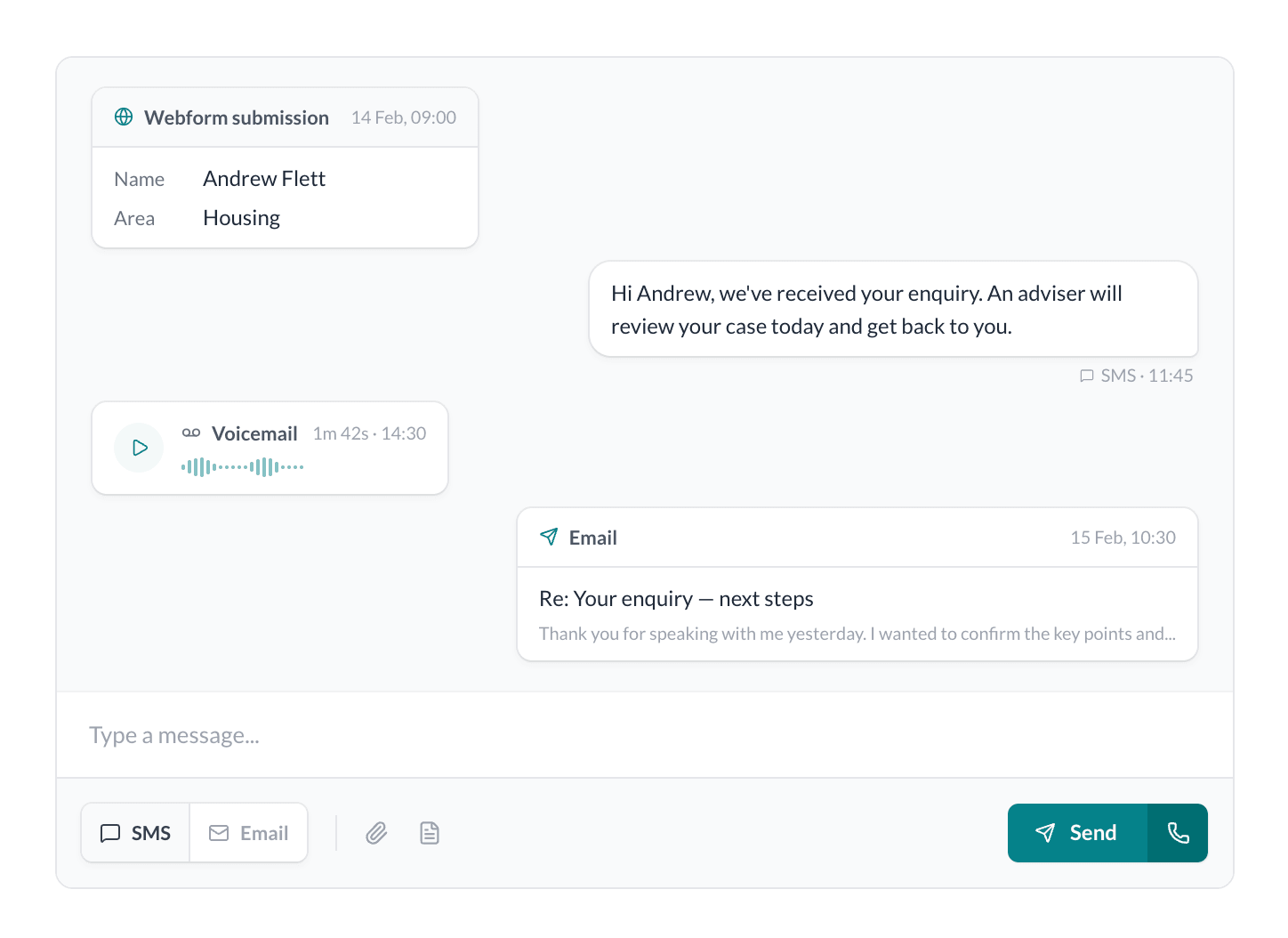
Launching a niche SaaS to help Law Centres manage complex triage across calls, emails, and SMS
EnquiryDesk grew from a digital accelerator programme run with the Law Centres Network through Catalyst. Law Centres provide free legal advice to people who can't afford it, and the work started by spending time in centres across the country, sitting alongside advisers as they took calls, triaged walk-ins, and tried to keep track of who needed what.
Starting with the people, not the product
The problems were not abstract. You could watch someone pick up the phone, scribble a name on a Post-it, then spend twenty minutes trying to work out if this person had already spoken to a colleague last week. Every centre had its own workarounds: elaborate spreadsheets, one person's memory, conversations scattered across individual inboxes and scraps of paper. Staff were doing impressive work despite having no proper tools, and the volume was only going to grow.
That research fed directly into working code, not a slide deck. Prototypes were built alongside the research, so ideas could be tested with real staff in real centres within days rather than months.
Initial prototypes: SMS first
The first iteration was deliberately narrow. SMS only. Staff could send and receive texts from a unified number, with basic triage and tracking. It solved the most immediate thing observed during research: people who couldn't afford phone credit could still text, and centres kept losing track of those conversations. Getting something working and into staff hands within days meant the feedback was immediate and honest in a way that no prototype presentation ever is.
Managing enquiries across every channel
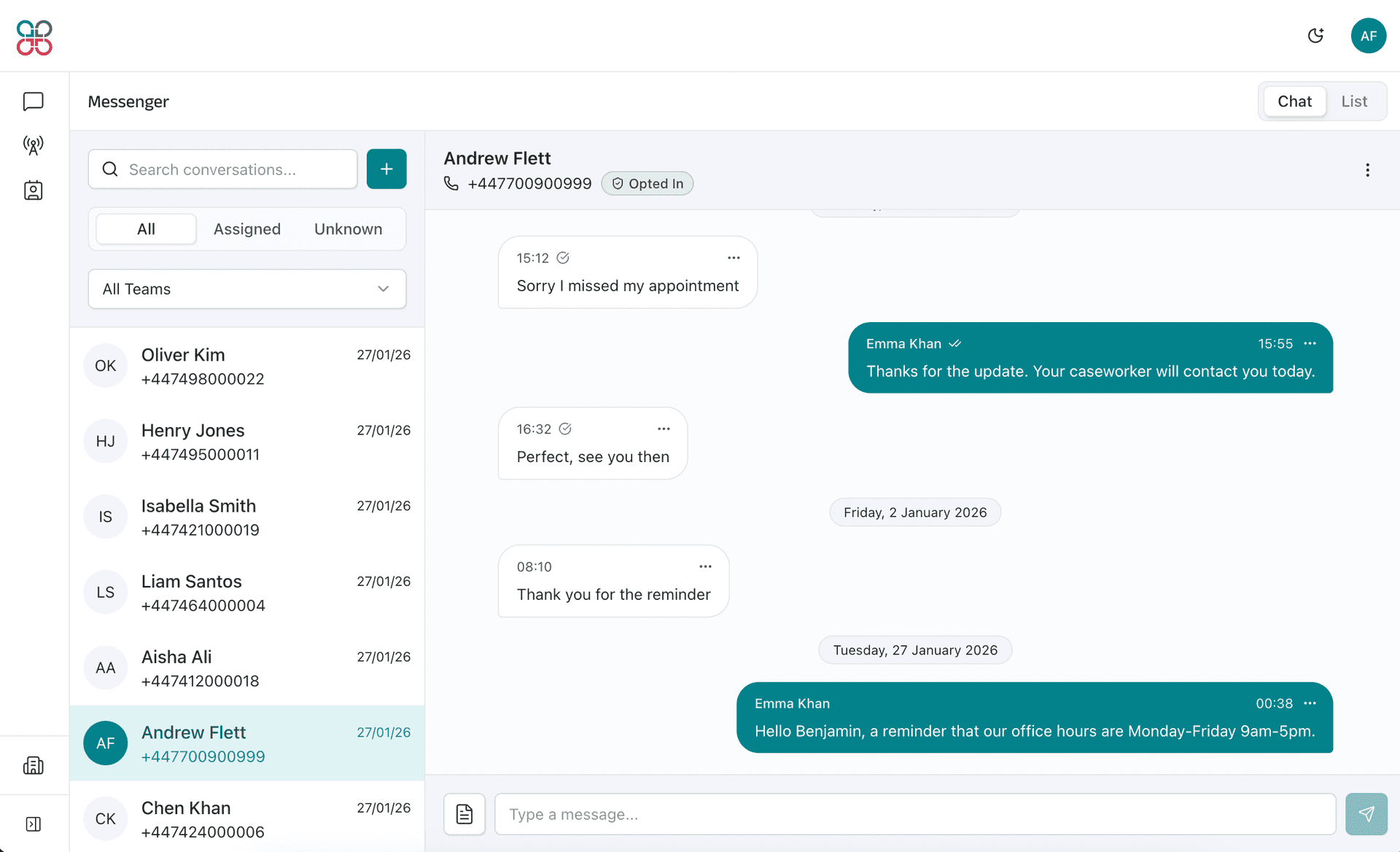
The second iteration expanded the scope considerably. EnquiryDesk became an omnichannel communications and triage platform that brings everything into one place: phone calls, emails, SMS, webforms, chat, and WhatsApp. Built with React and Ruby on Rails, with Twilio and SendGrid handling the communications layer.
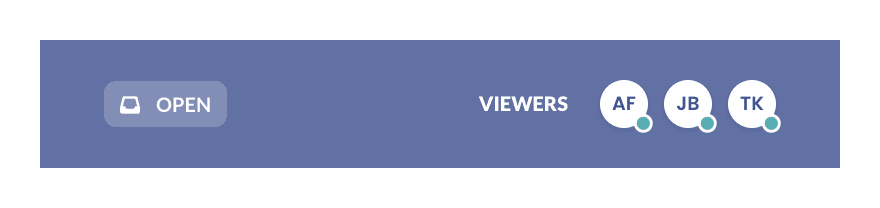
The big leap was making this a collaborative, real-time tool built for complex team dynamics. Multiple staff across different centres can be working enquiries simultaneously, and the platform keeps everyone in sync. Real-time presence tracking means you can see exactly who's looking at what, so no one duplicates effort and no client gets lost between handoffs.
Triage and ownership
Triage was the single biggest problem that came out of the research. When enquiries arrive by phone, email, SMS, and walk-in simultaneously, and staff are scribbling notes on paper or toggling between inboxes, things get missed. Someone calls about a housing issue, a colleague picks up the same case by email two days later without realising, and the client ends up repeating themselves to three different people. Or worse, nobody picks it up at all.
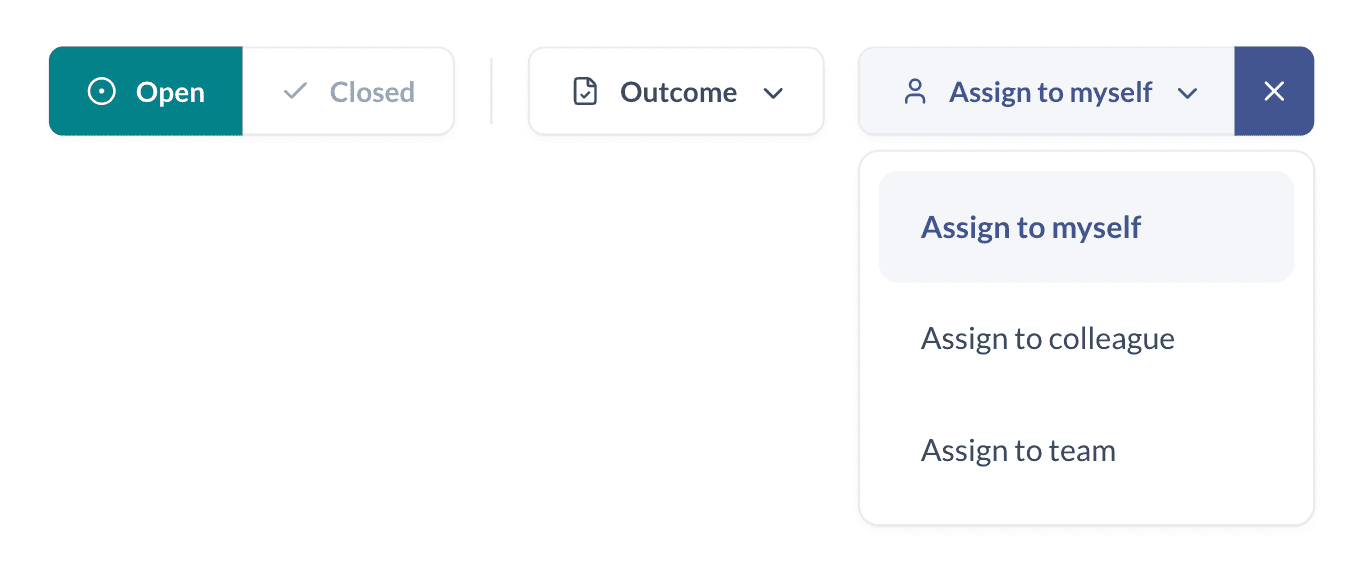
EnquiryDesk gives every enquiry a clear status, outcome, and owner from the moment it lands. Enquiries can be assigned to individuals or teams, and handoffs are explicit rather than assumed. The triage bar sits at the top of every enquiry so the current state is always visible at a glance.
Splitting and merging
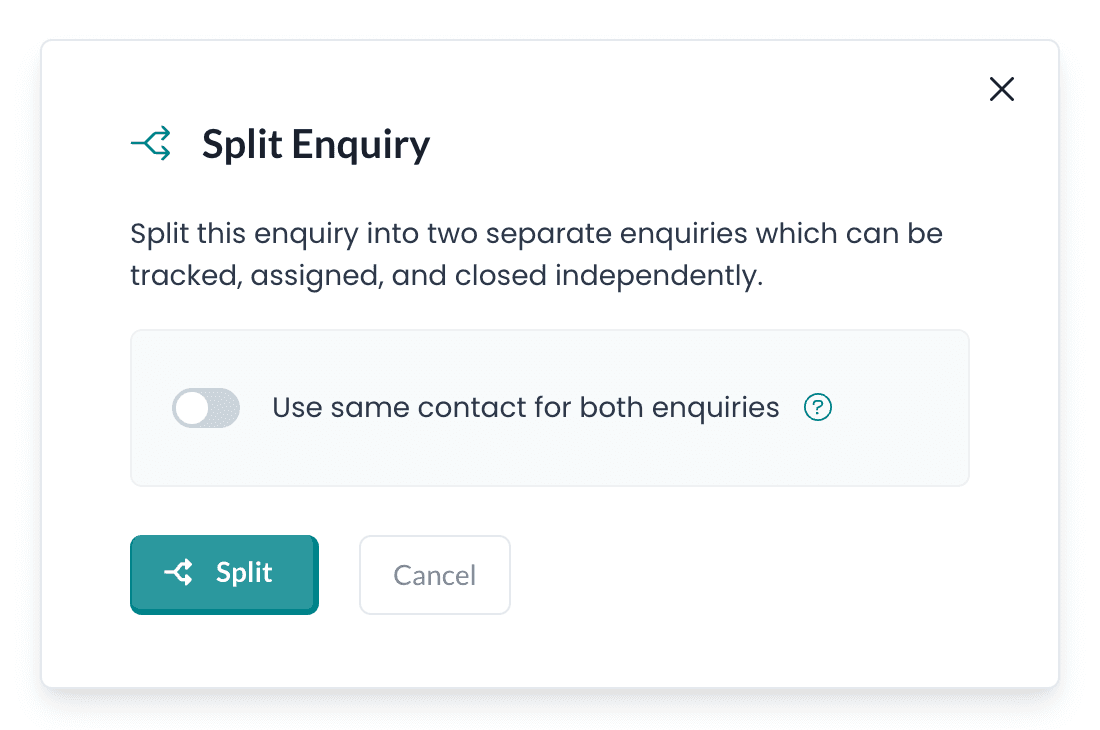
People don't always call about one thing. A single enquiry might cover housing and immigration issues that need to be tracked separately. The split feature lets staff break an enquiry into two independent cases, each with its own triage path, while optionally keeping the same contact details across both.
Configurable templates
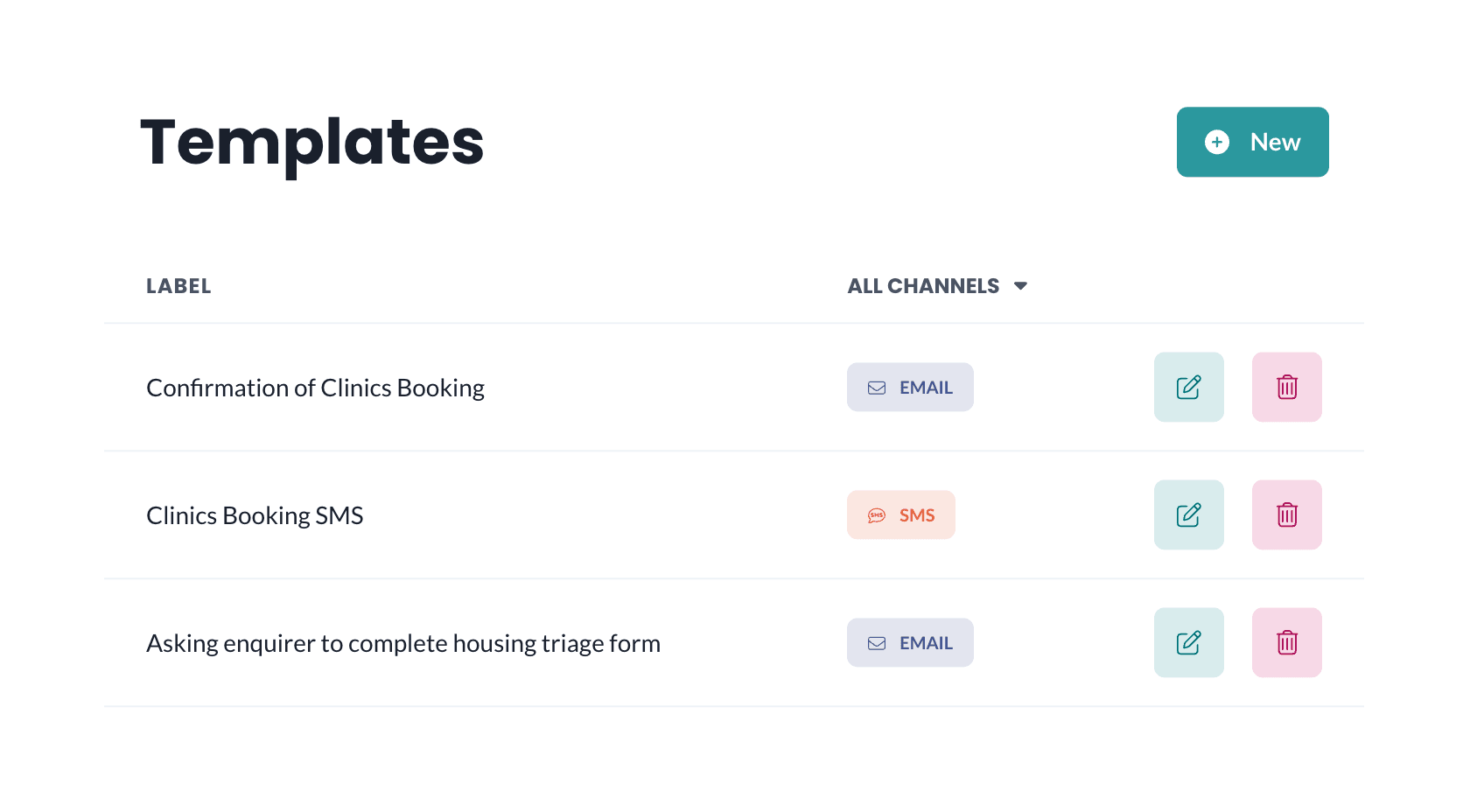
Centres send a lot of the same messages: booking confirmations, signposting information, triage forms. Rather than retyping these every time, staff can manage a library of templates across SMS and email channels.
Custom fields for every centre
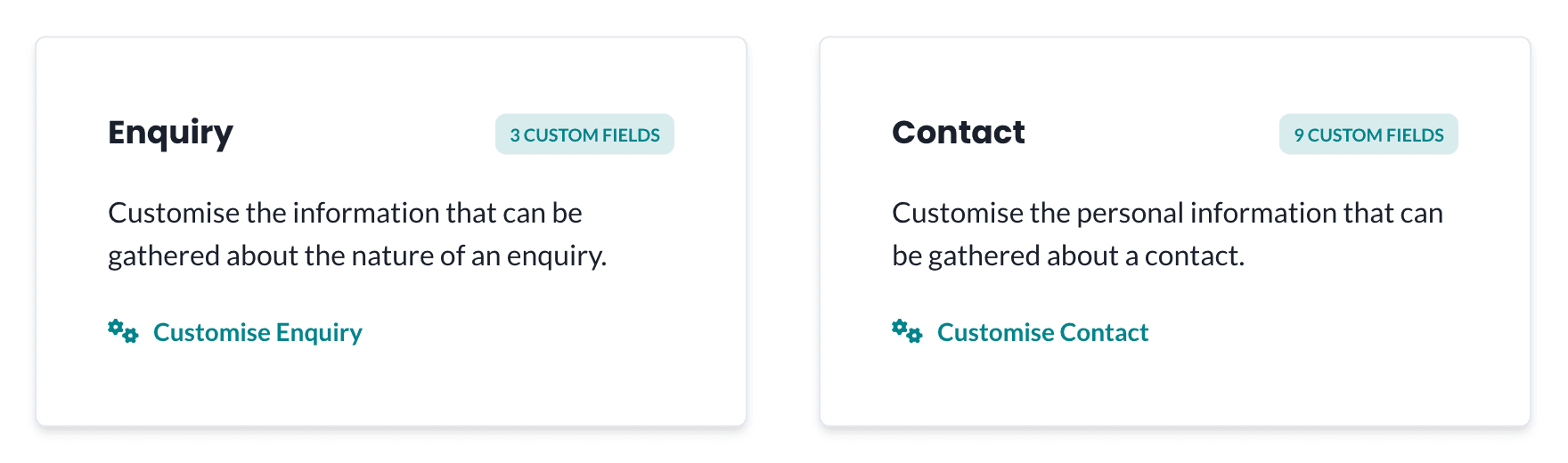
Every Law Centre has slightly different information needs. Some need to track court hearing dates, others need landlord details or dispute parties. The platform lets each centre define custom fields for both enquiries and contacts, so the system moulds to how they actually work rather than the other way around.
Staff preferences and availability
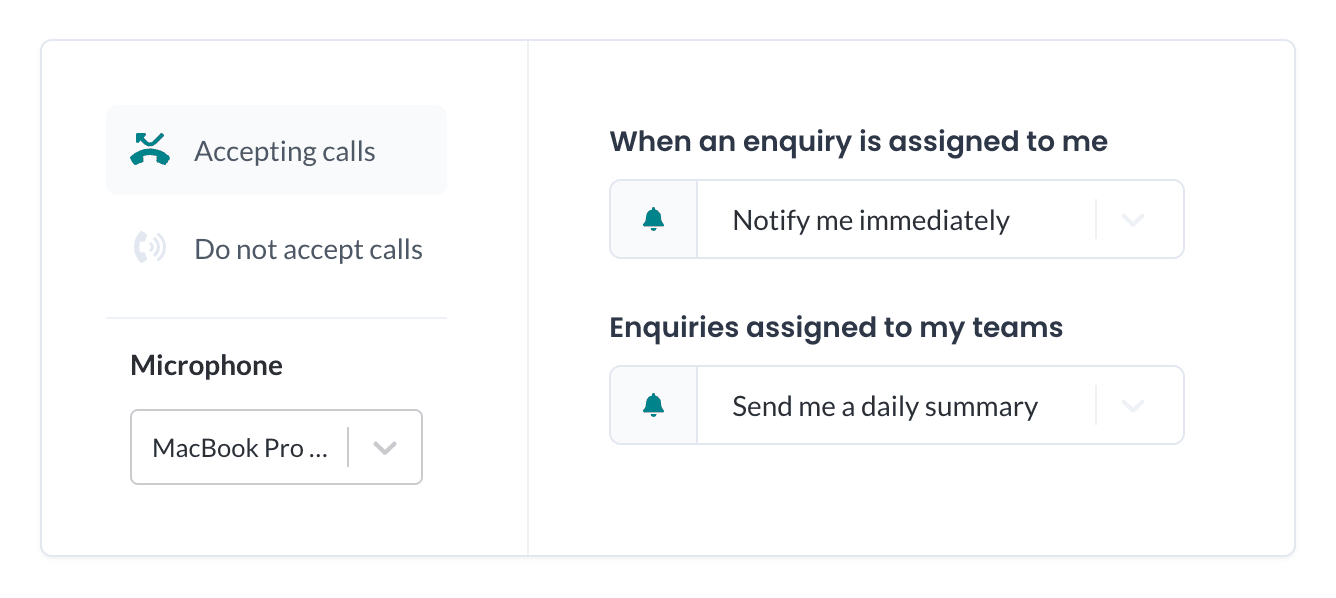
Staff can set their own availability for incoming calls, choose their microphone, and configure how they want to be notified about new enquiries, whether that's an immediate alert or a daily summary.
Designed in code, tested in production
Pain points were mapped across multiple centres before any code was written. The real advantage was designing in code from the start. No static mockups, no handoff documents. Working prototypes were in the hands of real staff handling real enquiries within days. Feedback loops were tight. If something didn't work, it was obvious immediately because people were actually using it.
The platform evolved through genuine use rather than assumptions. Features that seemed essential on paper got dropped when staff didn't reach for them. Others that nobody had asked for became obvious once someone was watched struggling without them. Iterating in production with real data and real urgency is a very different discipline to iterating on a Figma board.
Where it is now
EnquiryDesk is live in several Law Centres and rolling out nationwide as part of the Network's digital transformation. Response times are faster, fewer enquiries slip through, and centres finally have visibility into the demand they're facing.
Visit enquirydesk.app to learn more about the platform.